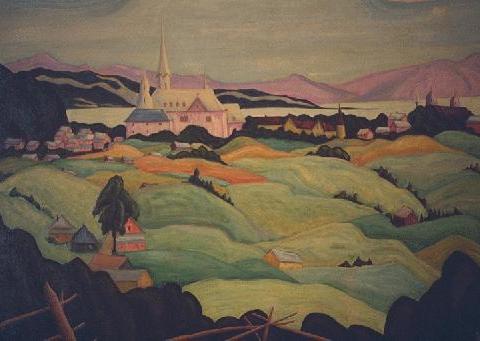
Showing posts with label Group of Seven. Show all posts

Saturday, March 27, 2010

Equanimity - Unpublished Selections Explained, Med. VII.38

Sierra Club

Meditation VII.38 - Equanimity - Translated by George Long and rewritten by Russell McNeil

It is not right to worry ourselves about things, for they care nothing about it.(1)

Explanation

(1) Being worried, vexed or annoyed with anyone - or in this example about "things," is a violation of one of the so-called Stoic "commandments" discussed in Meditation VIII.08 (in the book). The focus here is psychological and goes to the heart of the nature of worry. As discussed in more detail in Meditation VIII.42, when we think closely about worry we notice that most of our worries (be they about the past, present or future) turn on pleasure, pain, reputation, or money. But in Stoicism none of these things should ever be a cause for worry. Each of these areas is self-serving and body focussed. In Stoicism the appropriate stance toward each of these is indifference. We may think that the good life is defined by a financial prosperity that ensures ample pleasure, freedom from pain and enduring reputation. But the Stoic understands that it is possible to be truly happy without these things. A Stoic has no reason to avoid the simple pleasures of life or not to take measures to avoid discomfort. But these ought not be the focus of our existence and they ought never prevent us from being good.

The problem with worry in Stoic terms goes beyond the irrationality of focusing mental energy on inanimate objects (for example, we become angry at our car when it breaks down and worry about the financial implications). The worry itself and the emotional state that worry engenders (anger, rage, dejection, fear) alienates us from what is true about existence. The universe is beautiful and good, and the laws that act on the things we worry about are - in and of themselves - part of the beauty of nature. Stoicism is never about denial; it is about embracing change and accepting life. Your car will break down. You will have accidents and setbacks. These are all inevitabilities and manifestations of the operations of nature. Everything changes, decays and dies. This is the Law, and the Law is inherently good. We have the power to change our attitude or opinion about these things from worry to indifference. This is equanimity - a virtue (please see also Meditation VIII.32). Through equanimity we will remain tranquil through any disturbance.

Russell McNeil, PhD, is the author of The Meditations of Marcus Aurelius: Selections Annotated and Explained by Skylight Paths Publishing. The unpublished selections presented in this Blog are provided as supplemental material to the published selections which are annotated and explained in the book. The published selections are referenced in this Blog by page number and section.

Tuesday, October 30, 2007

Frederick Horsman Varley (1881-1969)


Canadian painter and a founding member of the Group of Seven. As Varley and Arthur Lismer were schoolmates, the early history of their lives is very similar. Like Lismer, Varley was born in Sheffield, studied at the Sheffield School of Art and later, the Antwerp Academy, in Antwerp, Belgium. At Antwerp, Varley had a reputation of being a heavy drinker and leading a rather bohemian life. From Antwerp, he returned to London, where he almost starved trying to support himself as an illustrator. Four years later, on his return to Yorkshire, he married and fathered two children. In 1912, Lismer once again met up with Varley - who this time was depressed and struggling to support his family. Lismer persuaded him to come to Canada, where he found work at Grip.

In Toronto, Varley soon became friendly with the other artists at Grip. He was often a difficult person to get along with because of his temperamental moods and rather unconventional ways. He did however find a close friend in Tom Thomson, who was like him in spirit. They went on weekend excursions, but rarely sketched together, as Varley preferred people to trees for subject matter.

At first, Varley concentrated mainly on portraits and established himself as a painter of Toronto's elite society. Although this brought him much needed income, he disliked painting to order, and his ways soon upset his clients. At one sitting with Vincent Massey, magnate of the Massey-Harris fortunes, the client arrived an hour late. Once he had taken his seat, Varley put down his brushes and walked away saying "You wait there. Now I'm going out for an hour." Despite these disturbances, Varley was respected as a great painter, and when the World War One broke out, he was sent to France as a Canadian War Artist. At this point, he did very poignant work. Perhaps his most famous painting is entitled, For What?. He returned from the war matured both as an artist and as an individual. At this point, his interest in painting the Canadian north was awakened, and he began painting landscapes such as Stormy Weather, Georgian Bay. Varley's concern with the world of feelings and emotions was always relayed through his work.
Adapted from Canadian Government Group of Seven Web Site


Books from Alibris: Frederick Horsman Varley

Tuesday, September 11, 2007

Thoreau MacDonald (1901-1989)

Sierra Club

Summary

Thoreau MacDonald (1901-1989), Canadian designer and illustrator, and his father, J.E.H. MacDonald (1873-1932) - Canadian artist and founding-member of the Group of Seven (book on Group by Thoreau MacDonald) - worked as graphic artists at various stages of their careers, creating book covers, illustrations, end papers and book-plates. Thoreau MacDonald, in particular, made book illustration his personal interest, establishing his own Woodchuck Press (late 1930s) and catering to a new vogue for Canadian-made book-plates and labels (1890s-1930s). Despite his long experience in book design, J.E.H. MacDonald created only about 20 book-plate designs in his lifetime. [Adapted from National Gallery of Canada]

Books

Please browse our Amazon list of titles about Thoreau MacDonald. For rare and hard to find works we recommend our Alibris list of titles about Thoreau MacDonald.

AlibrisResearch

Logos Group of Seven Art Gallery
COPAC UK: Thoreau MacDonald
Library of Canada Search Form
Library of Congress: Thoreau MacDonald
Books from Alibris: Thoreau MacDonald

J.E.H. MacDonald (1973-1932)

Sierra Club

Quotation

If the function of the artist is to see, the first duty of the critic is to understand what the artist saw.

Books

Please browse our Amazon list of titles about J.E.H. MacDonald. For rare and hard to find works we recommend our Alibris list of titles about J.E.H. MacDonald.

AlibrisResearch

Logos Group of Seven Art Gallery
COPAC UK: J.E.H. MacDonald
Library of Canada Search Form
Library of Congress: J.E.H. MacDonald

Biographical

J. E. H. MacDonald was the major force and inspiration in the formation of the Group of Seven. His son Thoreau MacDonald became an accomplished artist in his own right. The elder MacDonald was born in England and came to Canada at age thirteen where he studied at the Hamilton Art School, Hamilton. He worked as a commercial artist for Toronto Lithography Company and then Grip Ltd. After taking two years off to work as a book designer for Carleton, MacDonald became head designer at Grip.

To those who did not know him well, he appeared to be a quiet and shy redhead of frail stature with the dreamy air of a poet and philosopher. Underneath, he was a practical man who had great strength of character and was respected by the other artists as a father figure. A transcendentalist who read Whitman and Thoreau, MacDonald believed that through nature, man reached a higher spiritual end. This he tried to show through his art.

In 1911, MacDonald moved his wife and family to Thornhill, Ontario, quit his job and began to paint full time. Here, he found inspiration from the surrounding countryside. In the next few years his painting was to get a 'boost' as he began to travel north - first to the Georgian Bay area and then to Algonquin Park. The appeal of the North was very strong for both MacDonald and his good friend Tom Thomson. Tom Thomson and MacDonald are considered to have had tremendous impact on each other's work. After Tom Thomson's death in 1917, MacDonald suffered a physical collapse and possibly a stroke while working on the memorial cairn at Canoe Lake in Algonquin Park. He was bedridden for several months, but was well enough by the fall of 1918 to travel with Harris and Johnston on the first boxcar trip to Algoma.

In Algoma MacDonald received his greatest inspiration. For the next five years, he entered his most productive phase of painting. Algoma became known as "MacDonald's country." Here he created vital works such as Wild River. While the Group of Seven was considered to be radical for its time, at age forty-seven when the Group formed, MacDonald could hardly be referred to as a "young radical." In 1922 he began to teach at the Ontario College of Art and continued to paint. Some critics felt his painting came with more difficulty than in his earlier work and somehow with a lack of original feeling. MacDonald did however, continue to be a mainstay and stabilizing force for the members of the Group of Seven. [Adapted from Canadian Government Group of Seven Web Site]

Books from Alibris: J.E.H. MacDonald

Monday, September 10, 2007

Arthur Lismer (1885-1969)

Sierra Club

Quotation

If it moves, we can educate it. If it is alive, we can keep it moving.

Books

Please browse our Amazon list of titles about Arthur Lismer. For rare and hard to find works we recommend our Alibris list of titles about Arthur Lismer.

AlibrisResearch

Powerpoint: The Road to Expressionism
COPAC UK: Arthur Lismer
Library of Canada Search Form
Library of Congress: Arthur Lismer

Biographical

In 1911, at age twenty-six, Arthur Lismer joined Grip. He had just arrived in Canada from the industrial city of Sheffield,England. At the age of thirteen, Lismer won an entrance scholarship to the Sheffield School of Art and began what was, to most people, a seven year apprenticeship towards becoming a silver craftsman. Unhappy and feeling too confined in England, he went to Antwerp for a year and a half to study at the Academie Royal des Beaux-Arts. At first influenced by the Barbizon ("cow") school, Lismer was later deeply moved by the Post-Impressionist works, especially of Van Gogh. Back in Sheffield, Lismer struggled as a commercial artist and soon decided to head for Canada, where he had heard commercial artists were doing extremely well. Lismer landed a job at Grip immediately upon his arrival in 1911. He was one of the four employees, who later formed the Group of Seven, to leave work for Rous and Mann printing house in 1912.

Arthur Lismer was a man of considerable energy - a gregarious, outgoing individual, always ready with a witty or caustic remark. Nothing delighted him more than taking a crack at the establishment or at anything that hinted at pretension. Speaking of Tom Thomson, he once said, "If the country's half as stirring as Tom's sketches seem to indicate, in Heaven's name why are so many Canadians always talking about their stomachs, their money? Where's the Romantic spirit, the philosophic spirit?"

This ‘spirit' and energy made Lismer fight against the apathy and ignorance of the public towards the world of art. He did this by dividing his time between painting and teaching. In 1916, he began his lifelong career in teaching, as principal of an art school in Halifax a career that took him all over Canada and the world. In his teaching, Lismer's passion was devoted to children's art, and in his painting it was the Canadian landscape. In both cases, he went at the task in a bold, colourful way. [Adapted from Canadian Government Group of Seven Web Site]

Books from Alibris: Arthur Lismer

Monday, September 3, 2007

Frank Johnston (1888-1949)

Sierra Club

Summary

Frank Johnston was the only member of the Group of Seven who did not retain his membership throughout the years the Group of Seven existed. This Toronto born artist also worked briefly for Grip Ltd. Johnston started at the Grip in 1908 and then moved on to work for Rous and Mann Printing House. In 1910 he went to the United States. Johnston first studied art in Philadelphia and then did commercial work in New York. Before and after his return to Canada, Johnston was an eager participant in Group activities. A member of the Arts and Letters Club, he was a friend of both MacDonald and Harris. He went on all the Algoma trips except the last. A man of staggering energy and enthusiasm, he also had an amazing rate of production. In the 1919 Algoma show he contributed sixty works - more than any other artist. A few months later, he extended his independence even more, having a large one-man show of 200 paintings at the T. Eaton Company Galleries. In the fall of 1921, Johnston left Toronto to accept the position as principal of the School of Art in Winnipeg. There he held the largest show ever seen in that city. He had been slowly moving away from the Group of Seven movement, and now the break was complete. In 1924, he announced his official resignation, claiming that he had no disagreement with the Group, only that he wanted to go his own way with regards to exhibitions. This was certainly in keeping with the character of this energetic, ambitious and strong willed man. When Johnston left The Group of Seven, he turned more to working for department store art galleries. Unfortunately, his work lost its earlier fresh vitality and became more decorative. He was a superb craftsman, but was mainly concerned with decorative effects, which he consciously sought out. [Adapted from Canadian Government Group of Seven Web Site]

Books

Please browse our Amazon list of titles about the Group of Seven. For rare and hard to find works we recommend our Alibris list of titles about the Group of Seven.

AlibrisResearch

Powerpoint: The Road to Expressionism
Logos Group of Seven Art Gallery
COPAC UK: Frank Johnston
Library of Canada: Frank Johnston
Library of Congress: Frank Johnston
Books from Alibris: Group of Seven

A.Y. Jackson (1882-1974)

Sierra Club

Quotation

It's probably hard for anyone looking at my landscapes today to realize that I was once regarded as a rebel, a dangerous influence; that I've been told I was on the verge of insanity, that my painting was nothing but meaningless daubs. Lawren Harris, the man most responsible for drawing the Group of Seven together, was accused of something perilously close to treason – his paintings, said his severest critics, were discouraging immigration.

Books

Please browse our Amazon list of titles about the Group of Seven. For rare and hard to find works we recommend our Alibris list of titles about A.Y. Jackson.

AlibrisResearch

Logos Group of Seven Art Gallery
Powerpoint: The Road to Expressionism
COPAC UK: A. Y. Jackson
Library of Canada: A. Y. Jackson
Library of Congress: A. Y. Jackson

Biographical

A.Y. Jackson is the man often regarded as the leading advocate for the Group of Seven. Born in Montreal, Jackson was forced to earn a living at an early age when his father abandoned the family of six children. A.Y. went to work as an office boy for a lithograph company, where he received his earliest training. In 1905, at the age of 23, he worked his way to Europe on a cattle boat, and then back to Chicago where he worked in a commercial art firm. By 1907 he had saved enough money to return to France to study Impressionism. There, Jackson decided to become a professional painter.

When Jackson returned to Canada he settled in Sweetsburg, Quebec and began producing works such as The Edge of Maple Wood. He struggled in Quebec for several years, and considered a move to the United States, as he was becoming more and more discouraged by the art situation in Canada. Before Jackson was able to move, he received a letter that was to change the course of Canadian art. A Toronto based artist by the name of J.E.H. MacDonald wrote to Jackson enquiring about a painting he had seen at a Toronto showing several years earlier. It was Jackson's The Edge of Maple Wood. In his letter, MacDonald said that if Jackson still owned the painting, another Toronto artist by the name of Lawren Harris wished to purchase it. This letter and purchase provided the link between Jackson and the Toronto based artists. They continued correspondence and debate over the Canadian art situation, and soon Jackson began spending extended periods of time in Toronto.

A.Y. Jackson was involved in all the major Group trips to Algonquin Park, Georgian Bay, Algoma and the North Shore. He was a rugged individual and some felt that Jackson had a romantic need to prove himself by undergoing great hardships. He became great friends with Tom Thomson, and they spent much time outdoors fishing and sketching. In 1913, Harris talked Jackson into spending the entire summer painting around Georgian Bay. Dr. McCallum then offered use of his cottage and one year free expenses as well as use of a room in the Studio Building. When war came, Jackson was the only member to see action and was wounded soon after he reached the front. Later, he worked for the Canadian War Memorials. In 1925 he taught at the Ontario College of Art (OCA), in Toronto, the only time in 30 years that he missed travelling home to Quebec for Spring. This is really where his heart and best paintings were based.

A.Y. Jackson's works and personality were immensely popular. He was direct and easy to understand, both in his painting and as a person. He was an outward looking artist, whose main concern was to record the landscape before him and reveal Canada to Canadians. [Adapted from Canadian Government Group of Seven Web Site]

Books from Alibris: A. Y. Jackson

Friday, August 31, 2007

Bess Housser (1890-1969)

Sierra Club

Summary

Bess Housser began painting in 1924. She exhibited two canvasses at the 1928 Group of Seven exhibition, one of which is believed to be Laurentian Village shown here. Housser was married to Group of Seven painter Lawren Harris. [Adapted from Housser Page]

Books

Please browse our Amazon list of titles about Bess Housser. For rare and hard to find works we recommend our Alibris list of titles about Canadian Art.

AlibrisResearch

COPAC UK Search Form
Library of Canada Search Form
Library of Congress: Group of Seven
Books from Alibris: Canadian Art

Edwin Holgate (1892-1977)

Sierra Club

Summary

Edwin Holgate joined the Group of Seven in 1931 and is considered to have played a relatively minor role in their history. Previous to joining, Holgate had exhibited with the group as an invited contributor.

He never exhibited as a Group member due to their disbanding shortly after he joined. Holgate was born in Ontario, but raised in Montreal, where he began studying art at an early age under William Brymer. Following a number of years in Paris, both before and after the war, he returned permanently to Montreal in 1922.

Holgate than opened a studio and taught wood engraving at the Ecole des Beaux Arts. He was friendly with Jackson and the Montreal artists of the Beaver Hall group and often went sketching with them in Quebec. At this point, he was considered a promising young artist, capable of competent works such as The Cellist. However, Holgate never seemed to develop to the potential indicated by his early works. His best known works are a series combining nudes and landscapes. [Adapted from Canadian Government Group of Seven Web Site]

Books

Please browse our Amazon list of titles about Edwin Holgate. For rare and hard to find works we recommend our Alibris list of titles about Edwin Holgate.

AlibrisResearch

Powerpoint: The Road to Expressionism
COPAC UK: Edwin Holgate
Library of Canada: Edwin Holgate
Library of Congress: Edwin Holgate
Books from Alibris: Edwin Holgate

Tuesday, August 28, 2007

Arthur Heming (1870-1940)

Sierra Club

Summary

Arthur Heming was a colour blind painter who worked only in black and white until 1930. Toronto Telegram critic Kenneth Wells described Heming's paintings as truly expressive of the Canadian north: "There is more of the north in them, more real Canadianism, as the landscape painters understand it, than in the whole lumped output of the Group of Seven.

His pictures may not appeal to the sophisticates of the studio...Gallery curators may not find them satisfying to that snobbism which breeds in such places...In a modernistic wilderness of self-expression he puts self aside to accurately describe on canvas the life of a northland that is passing and that will soon be only a dream...he paints the north not as a painter loving colour and design for its own sake, but as an artist loving it for his subject's sake. [Adapted from The Group of Seven: Art for a Nation, National Gallery of Canada, Charles C. Hill, McClelland & Stewart, 1995]

Books

Please browse our Amazon list of titles about Canadian Art. For rare and hard to find works we recommend our Alibris list of titles about Arthur Heming.

AlibrisResearch

Powerpoint: The Road to Expressionism
COPAC UK: Canadian Art
Library of Canada: Arthur Heming
Library of Congress: Arthur Heming
Books from Alibris: Arthur Heming

Saturday, August 25, 2007

Lawren S. Harris (1886-1970)

Sierra Club

Quotation

Abstract art is a creative interplay between the conscious and the unconscious, with the conscious mind making all the final decisions and in control throughout.

Books

Please browse our Amazon list of titles about Lawren S. Harris. For rare and hard to find works we recommend our Alibris list of titles about Lawren S. Harris.

AlibrisResearch

Logos Group of Seven Art Gallery
Powerpoint: The Road to Expressionism
COPAC UK: Lawren S. Harris
Library of Canada: Lawren S. Harris
Library of Congress: Lawren S. Harris
Other Library Catalogs: Lawren S. Harris

Biographical

Lawren Harris met the other artists who were to form the Group of Seven through the Arts and Letters Club. He had been a founding member of the Club and had a background very different to the other members of the Group. Harris was born in Brantford, Ontario and was an heir to the Massey-Harris fortunes, which supplied him with an independent income. A wealthy, conservative and religious upbringing in Toronto provided him with many privileged experiences. His education included St. Andrew's College at the University of Toronto. At age nineteen, he travelled to Europe to study art in Germany for three years. In 1908, he toured through the near East with a writer and had the illustrations he made there published in Harper's Bazaar.

Harris was an enthusiast and organizer. The idea of the Studio Building, where all Group members could work, originated with Harris, who paid three quarters of the cost, while Dr. McCallum contributed the rest. After his discharge from the army, where he taught musketry at Camp Borden, Harris persuaded the Algoma Central Railway to lend him a boxcar and so began the first trips to Algoma. Harris invited artist friends - all expenses paid - and outfitted the boxcar as a studio on wheels with bunks, tables, chairs, a stove, shelves, a canoe and a 3-wheel jigger for short runs up and down the tracks. The last Algoma trip was in 1921. At this time, Harris and Jackson travelled to the North Shore of Lake Superior. Harris became widely known for paintings of this area. Here, the starkness and bareness of the landscape corresponded with the direction in which his paintings were moving.Lawren Harris was convinced that art must express spiritual values as well as portraying the visible world. To him, the role of the artist and the function of art was to reveal the divine forces in nature. He gradually moved toward greater abstraction and thus more complete expression of his philosophical views. Harris was doing much more than trying to paint the northland as he saw it. His goal was to incorporate his spiritual feeling for the landscape into his work. After 1924, he no longer dated or signed his works because he did not want them to be tied to a specific artist or place. While Lawren Harris continued to explore new ideas, he also continued to be a driving force behind the Group of Seven. Harris was married to the accomplished artist Bess Housser. [Adapted from Canadian Government Group of Seven Web Site]

Logos Works by Lawren S. Harris

Art Gallery: A Side Street (1920)
Art Gallery: Autumn (1920)
Art Gallery: Black Court (1921)
Art Gallery: Dr. Salem Bland (1925)
Art Gallery: First Snow (1923)
Art Gallery: From the North Shore (c. 1927)
Art Gallery: Grey Day in Town (1923)
Art Gallery: Icebergs (1930)
Art Gallery: In the Ward (1920)
Art Gallery: Isolation Peak (1930)
Art Gallery: January Thaw (1921)
Art Gallery: Maligne Lake 1924)
Art Gallery: Miners' Houses (1925)
Art Gallery: Morning Light (c. 1927)
Art Gallery: Mount Lefroy (1930)
Art Gallery: Mountains and Lake (1929)
Art Gallery: Northern Lake II (c. 1926)
Art Gallery: Ontario Hill Town (1926)
Art Gallery: Shacks (1919)
Art Gallery: Spring on the Oxtongue (1924)

Books from Alibris: Lawren S. Harris

Thursday, August 23, 2007

Group of Seven (1920-1932)

Sierra Club

Quotation

The great purpose of landscape art is to make us at home in our own country.

Books

Please browse our Amazon list of titles about Group of Seven. For rare and hard to find works we recommend our Alibris list of titles about Group of Seven.

AlibrisResearch

Logos Group of Seven Art Gallery
Powerpoint: The Road to Expressionism
COPAC UK: Group of Seven
Library of Canada: Group of Seven
Library of Congress: Group of Seven

Biographical

This quote above was called an "Algomaxim," a word created to express the sentiments of the soon to be created Group of Seven. Long before the group of Seven was formed Carl Ahrens (1862-1936), a Canadian impressionist artist had argued for a Canadian art free from "alien influences." He campaigned for a group of pioneers who would ignore foreign trends and set a national standard independent of the currents of Post-Impressionism and Futurism.

But it was an artist named Tom Thomson (1877-1917) whose inspiration and drive led directly to the formation of the Group of Seven. Thomson was a photo-engraver before moving to Toronto in 1905 where he eventually took a job at the design firm Grip Limited where he met J.E.H. MacDonald, with whom he started going on weekend sketching trips to nearby lakes. He made his first trip to Algonquin Park, Ontario, in the summer of 1912. He spent the summers from 1913 to 1917 as a ranger in Algonquin Park where he made numerous sketches of the rugged northern landscapes. He was active as a painter for only four years before his mysterious and untimely death. Although a close friend of several of the members of the Group of Seven, his death in 1917 occured three years before the group was officially formed.

In 1920, J.E.H. MacDonald (1873-1932), Lawren Harris (1885-1970), A.Y. Jackson (1882-1974), Arthur Lismer (1885-1969), Franklin Carmichael (1890-1945), F.H. Varley (1881-1969) and Frank Johnston (1888-1949) officially formed this now famous group. These were painters bitten by the Canadian north who, for the first time, took on the task of painting the great power, scenery and spirit of their land. This truly Canadian art movement was started, not by professional painters, but by a loose association of acquaintances who travelled north from Toronto on their vacations to paint and relax. The modern Canadian so called 'school', was inspired as the result of a direct contact with nature itself. In 1924 one of the original founding members Frank Johnston resigned from the Group. Later the original Group of Seven (now six members) was expanded to nine members with the addition of A.J. (Alfred Joseph) Casson (1898-1992), Edwin Holgate (1892-1977) and Lionel LeMoine Fitzgerald (1890-1956), the only western canadian member and a founding member of the Canadian Group of Painters.

The Group of Seven was disbanded in 1932 after the death of its inspirational founder J.E.H. MacDonald and succeeded by the Canadian Group of Painters (see above). The influence of the Group of Seven art movement is seen in the works of many other artists of this period. These include: Bertram Brooker (1888-1955), Thoreau MacDonald (1901-1989), Charles Comfort (1900-1994), Anne Savage (1896-1971), Arthur Heming (1870-1940), Sarah Robertson (1891-1948), Albert H. Robinson (1881-1956), Emily Carr (1871-1945), David Milne (1882-1953), Bess Housser (1890-1969) (married to Lawren Harris), and Archibald Barnes (1887-1971). [Adapted from Canadian Government Group of Seven Web Site]

Logos Group of Seven Art Gallery

Art Gallery: A.J. Casson : Afternoon Sky (1926)
Art Gallery: A.J. Casson: Mill Houses (1928)
Art Gallery: A.J. Casson: October (1928)
Art Gallery: A.Y. Jackson: Herring Cove, Nova Scotia (1919)
Art Gallery: A.Y. Jackson: Manseau, Quebec (c. 1926)
Art Gallery: A.Y. Jackson: Morning (1924)
Art Gallery: A.Y. Jackson: Springtime in Picardy (1919)
Art Gallery: A.Y. Jackson: Terre Sauvage (1913)
Art Gallery: Arthur Lismer: A Factory Town - North of England (1924)
Art Gallery: Arthur Lismer: Evening Silhouette, Georgian Bay (1928)
Art Gallery: Arthur Lismer: Halifax Harbour, Time of War (1918)
Art Gallery: Arthur Lismer: Isles of Spruce, Algoma (1922)
Art Gallery: Arthur Lismer: Pines, Georgian Bay (1927)
Art Gallery: Arthur Lismer: Quebec Village (1926)
Art Gallery: Arthur Lismer: The Glacier (1928)
Art Gallery: Arthur Lismer: The Mill, Quebec (1925)
Art Gallery: Edwin Holgate : Nude (1930)
Art Gallery: F.H. Johnston: Fire Swept - Algoma (1920)
Art Gallery: Frank Carmichael: Autumn Hillside (1920)
Art Gallery: Frank Carmichael: In the Nickel Belt (1928)
Art Gallery: Frederick Varley: Red Rock and Snow (1927/8)
Art Gallery: Frederick Varley: The Sunken Road (1918)
Art Gallery: J.E.H MacDonald: Rain in the Mountains (1924)
Art Gallery: J.E.H MacDonald: The Wild River (1919)
Art Gallery: J.E.H. MacDonald: The Tangled Garden (1916)
Art Gallery: Lawren S. Harris: A Side Street (1920)
Art Gallery: Lawren S. Harris: Autumn, Algoma (1920)
Art Gallery: Lawren S. Harris: Black Court, Halifax (1921)
Art Gallery: Lawren S. Harris: Dr. Salem Bland (1925)
Art Gallery: Lawren S. Harris: First Snow (1923)
Art Gallery: Lawren S. Harris: From the North Shore (c. 1927)
Art Gallery: Lawren S. Harris: Grey Day in Town (1923)
Art Gallery: Lawren S. Harris: Icebergs, Davis Strait (1930)
Art Gallery: Lawren S. Harris: In the Ward (1920)
Art Gallery: Lawren S. Harris: Isolation Peak, Rocky Mountains (1930)
Art Gallery: Lawren S. Harris: January Thaw, Edge of Town (1921)
Art Gallery: Lawren S. Harris: Maligne Lake, Jasper Park (1924)
Art Gallery: Lawren S. Harris: Miners' Houses, Glace Bay (1925)
Art Gallery: Lawren S. Harris: Morning Light, Lake Superior (c. 1927)
Art Gallery: Lawren S. Harris: Mount Lefroy (1930)
Art Gallery: Lawren S. Harris: Mountains and Lake (1929)
Art Gallery: Lawren S. Harris: Northern Lake II (c. 1926)
Art Gallery: Lawren S. Harris: Ontario Hill Town (1926)
Art Gallery: Lawren S. Harris: Shacks (1919)
Art Gallery: Lawren S. Harris: Spring on the Oxtongue River (1924)

Books from Alibris: Group of Seven

Monday, August 13, 2007

Lionel FitzGerald (1890-1956)

Sierra Club

Summary

Born in Winnipeg, Manitoba. Lionel LeMoine FitzGerald's boyhood summers had been spent on his grandmother's prairie farm. FitzGerald studied art in Winnipeg, Pittsburgh and New York and in 1924 began teaching at the Winnipeg School of Art. In 1929 he was appointed Principal of the school, a position he held until 1949. FitzGerald was the only western Canadian painter to become a member of the Group of Seven. Although geographically removed from the centre of activity as well as employing a very different approach to landscape painting, FitzGerald was invited to become a member of the Group of Seven shortly before it disbanded in 1932 and subsequently became one of the founding members of its successor, the Canadian Group of Painters. His paintings are of prairie scenes. In later years, FitzGerald focused on abstract painting and still life, working mainly in chalk, ink and watercolour. [Adapted from McMichael Collection]

Books

Please see our Amazon title about Lionel LeMoine FitzGerald. For rare and hard to find works we recommend our Alibris list of titles about Lionel LeMoine FitzGerald.

AlibrisResearch

Powerpoint: The Road to Expressionism
Logos Group of Seven Art Gallery
COPAC UK: Lionel LeMoine FitzGerald
Library of Canada: Lionel LeMoine FitzGerald
Library of Congress: Lionel LeMoine FitzGerald
Other Catalogs: Lionel LeMoine FitzGerald
Books from Alibris: Lionel LeMoine FitzGerald